
November is men’s health month for a lot of guys thanks to Movember. It’s a good excuse to deal with the stuff most men put off, and one of the most common is wondering if low testosterone is behind the fatigue, low drive and slow recovery.
Here’s how low T is actually diagnosed, and why the number on your lab report is only part of the answer.
Symptoms come first
Testosterone testing makes the most sense when you have symptoms. Common ones include:
- Low energy or fatigue
- Lower sex drive
- Erectile difficulties
- Loss of muscle or strength
- More body fat, especially around the waist
- Low mood or motivation
- Trouble concentrating
- Poor sleep
If several of these sound familiar, our post on low testosterone symptoms in men goes deeper.
How the test works
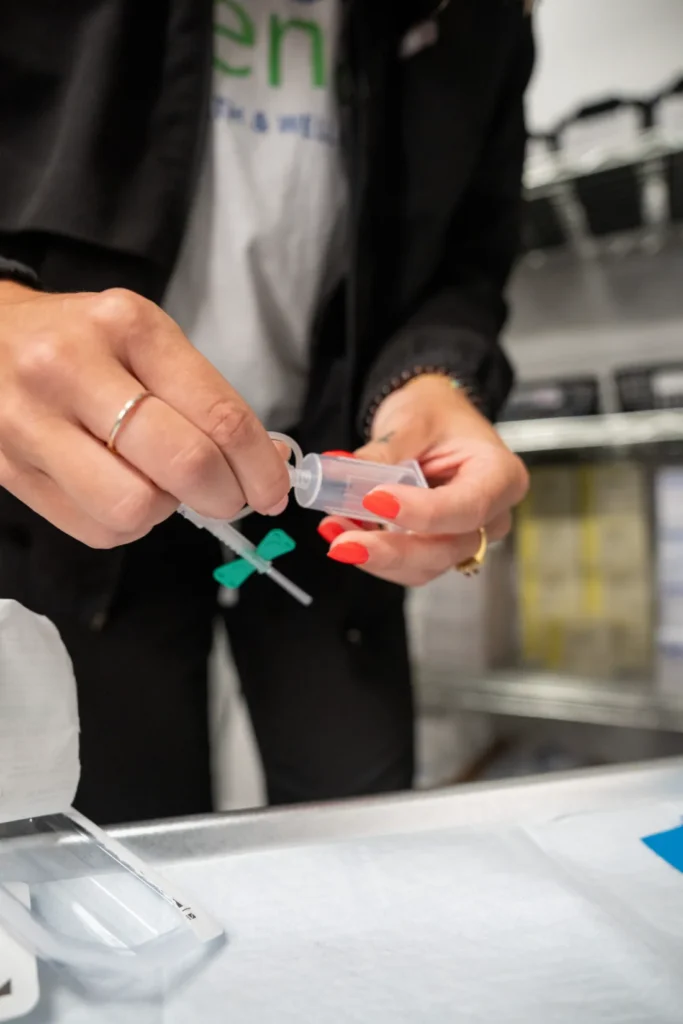
Low testosterone is confirmed with bloodwork, not symptoms alone. A few details matter:
Timing. Testosterone is usually highest in the morning, so a morning draw gives the most useful reading.
Repeat testing. Levels move day to day. Clinical guidelines generally recommend confirming a low result with a second test before starting treatment.
The cutoff. The American Urological Association uses a total testosterone below 300 ng/dL as a reasonable cutoff for low testosterone, combined with symptoms. Some men feel symptoms above that line, and some feel fine below it, which is why the full picture matters.
Other labs that matter
A good testosterone workup looks at more than one number. Depending on your history, your provider may check:
- Total testosterone and, in some cases, free testosterone
- SHBG (sex hormone binding globulin), which affects how much testosterone your body can use
- Estradiol
- LH and FSH, which help show whether the issue starts in the testes or the brain’s signaling
- Hematocrit and hemoglobin, which need monitoring on testosterone therapy
- PSA, a prostate marker, for men in the right age range
- Metabolic markers like glucose, A1c and lipids
- Thyroid, since thyroid problems can cause similar symptoms
What can lower testosterone
Age plays a role, but it’s rarely the only factor. Poor sleep, untreated sleep apnea, extra body weight, alcohol, chronic stress, some medications and certain medical conditions can all lower levels. Sometimes addressing those makes a real difference on its own.
That’s why our consultations also cover sleep, training, nutrition and stress. Even for men who move forward with treatment, those habits affect how well it works.
Same-day labs at Juvenate
At Juvenate, your free consultation and lab work happen at the same visit. Labs are drawn in-house, so you don’t need to make a separate trip to an outside lab. When results come back, we sit down and explain what each marker means.
If testosterone therapy is a good fit, your plan is based on your symptoms, labs, history and goals, with regular monitoring after you start. Learn more about testosterone therapy for men or read about TRT benefits.
We see men from Panama City, Panama City Beach, Lynn Haven, Callaway, Santa Rosa Beach, Destin and 30A.
Frequently asked questions
What is a normal testosterone level for men?
Lab ranges vary, but total testosterone below 300 ng/dL, along with symptoms, is a commonly used threshold for low testosterone. Where you fall in the range and how you feel both matter.
Do I need to fast before a testosterone test?
Fasting isn’t always required for testosterone alone, but it may be requested if your panel includes glucose or lipids. A morning draw is generally recommended.
Can I raise testosterone naturally?
Better sleep, strength training, losing excess body fat, limiting alcohol and managing stress can all help. For some men, that’s enough. For others with confirmed low levels and symptoms, treatment may be appropriate.
How often are labs checked on TRT?
Monitoring is more frequent early on and then spaces out once you’re stable. Your provider will check testosterone, blood counts and other markers on a set schedule.
Your next step: Book a free consultation at our Panama City or Santa Rosa Beach clinic, or call or text 850-348-0293.
This article is for general education and isn’t medical advice. Talk with a qualified provider about your own health and treatment options.